Electric Bicycle 500 Watt: Is It Legal in Australia?
An electric bicycle 500 watt motor sounds like a bargain, but in Australia it is usually not a legal e-bike. The national standard that treats an e-bike as an ordinary bicycle sets the limit at 250 watts continuous rated power, with assistance that stops at 25 km/h. This guide explains what 500 watts means, why the 250 watt rule exists, how throttles fit in, what happens if a bike is over the limit and how to find a legal e-bike that still feels strong on hills. If you are considering a bike with a bigger motor, read this first.
What 500 watts means on an e-bike
Watts measure how much power a motor can deliver. A 500 watt motor can deliver twice the power of a 250 watt one, which means faster acceleration and stronger hill climbing. Sellers often quote peak power, which can be much higher than the continuous rating, so a motor sold as 500 watt may be rated differently on paper. What matters for the law is the continuous rated power printed on the motor label or in the maker specifications. Always ask for that figure in writing before you buy a bike that claims big numbers.
Some sellers also quote battery voltage and amp-hours to make a bike sound powerful. These numbers describe the battery, not the motor, so they do not change the legal rating. Ask for the continuous motor rating whenever a listing is vague.
The 250 watt rule for Australian e-bikes
In Australia an e-bike is treated as a bicycle if it meets EN 15194: a continuous rated motor power of no more than 250 W, assistance that cuts out at 25 km/h and a motor that helps when you pedal. An e bike 250 watt rated model can be ridden on roads and paths without a licence, registration or insurance. Bicycle Network explains the federal return to this standard and what it means for riders: Bicycle Network: federal return to the EN 15194 e-bike standard. A bike above these limits is treated differently and may be a motor vehicle.
Think about what you actually want from a bigger motor. If it is faster hill climbing, torque and gearing are the answer. If it is a higher top speed, the law and your safety are the limit. If it is carrying capacity, a cargo bike with a strong mid-drive does the job within the rules.
Throttles, speed and the law
Throttles are the other grey area. A throttle lets the motor drive the bike without pedalling, and the rules treat a bike that drives itself differently from a pedal-assist bike. Some bikes offer a low-speed walk-assist, and some are sold as an e-bike with throttle that is legal only in limited ways. Our electric bike with throttle page explains the differences, and it is worth reading before you buy a bike that advertises a full throttle ebike mode. The seller must be able to tell you how the bike meets the rules in your state.
What happens if a bike is over the limit
If a bike exceeds the limits, it may need registration, a licence and insurance, and it may not be allowed on bike paths or footpaths. Riding it on a public road without those things can lead to fines, and an insurer may refuse a claim. The seller may also refuse a warranty if the bike was modified. A grey-import bike with a very large motor can look attractive on price and still cost you more once you add up the risks. The ACCC explains the safety side of e-bikes and batteries: ACCC Product Safety: e-bikes and e-micromobility devices.
States can differ on details such as where an e-bike may be ridden and what happens when a bike is unregistered. When in doubt, contact the transport authority in your state before you buy a bike that is outside the standard.
Torque versus watts
Torque matters as much as watts when you feel the power. Torque is the twisting force the motor delivers to the pedals or the wheel, measured in newton metres. A good 250 W mid-drive can deliver 60 to 85 Nm, which is strong enough to climb steep hills with a load. A cheap 500 W hub motor may have less real torque than a good 250 W mid-drive. When you compare bikes, look at torque and the way the motor feels, not just the headline wattage. Our electric engine for bicycle page covers kits and what they can and cannot legally do.
Fitting a larger motor yourself brings another problem: the brakes, frame and tyres of a bike are designed for a certain speed and weight. A bike that goes faster than it was built for is harder to stop and harder to control, and that is where most serious injuries happen.
Legal e-bikes with real power
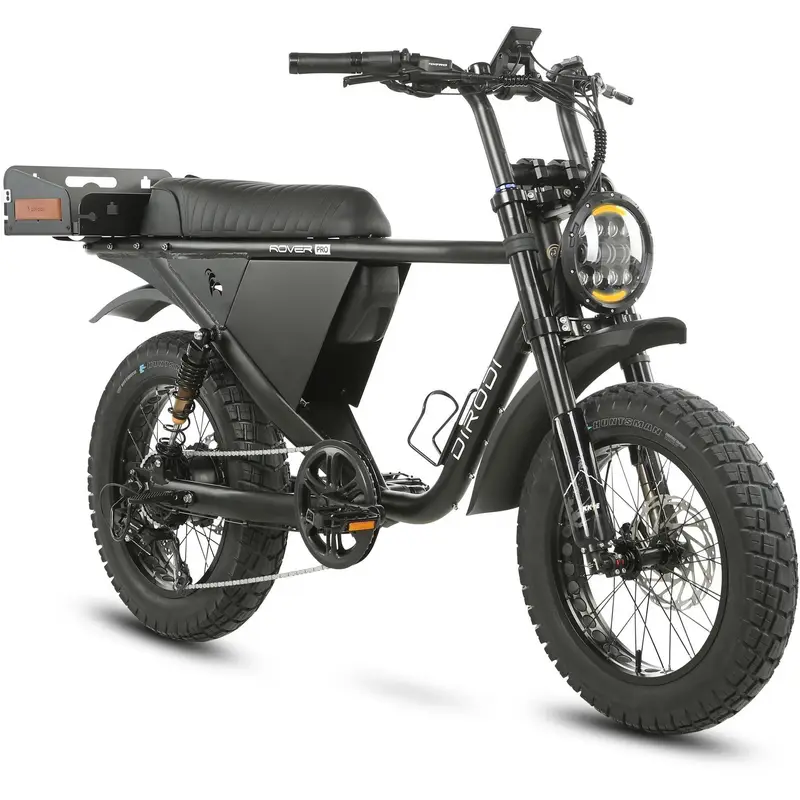
A legal e-bike can still be strong. The table lists bikes in our range, all with 250 W motors, from a big-battery fat bike to a Bosch trail hardtail and a Shimano trail bike. A high power ebike in the legal sense is one with good torque, a big battery and a well-tuned system. The embedded pick, the Dirodi Rover Pro 250W Electric Fat Bike, has a large battery and a wide tyre, and our fat wheel electric bike page lists the range. Prices are current at the time of writing, so check each product page before you order.
If you want the strongest legal feel, choose a mid-drive with a high torque figure, a battery of at least 500 Wh and good gearing, then ride in a middle assist level to save charge for hills.
| Model | Brand | Price (AUD) |
|---|---|---|
| Dirodi Rover Pro 250W Electric Fat Bike | Dirodi | $3,259 |
| Cube Reaction Hybrid Performance 500 Electric Hardtail Mountain Bike | Cube | $2,999 |
| Merida eOne-Sixty 400 Electric Enduro Bike | Merida | $4,477 |
| Pedal Bandit 20" Electric Fat Tyre Bike | Pedal | $1,299 |
| Cube Touring Hybrid ONE 600 Electric Hybrid Bike | Cube | $3,299 |
Prices are the current listed prices at the time of writing and can change. Check each product page for the latest price and stock.
How to check a bike before you buy
Before you buy, check the motor rating on the label, ask the seller how the bike meets EN 15194 and read the warranty terms. Ask about the electric motor bicycle controller settings, because a bike that can be unlocked to higher speed is a risk. Keep the paperwork, and wear a certified helmet from our e bike helmet range. If you want a bike that works across Australia without worrying about state rules, choose a pedal-assist bike that meets the standard. Our electric bike australia page lists the full legal range.
An electric bicycle 500 watt bike may promise more power, but it usually falls outside the Australian definition of an e-bike. Choose a bike that meets the 250 W and 25 km/h standard, look at torque and battery as well as watts and ask for written confirmation of the rating. You will ride more places, with fewer worries.
Frequently asked questions
Can I ride a 500 watt e-bike on the road?
Usually not as an e-bike. A bike with a motor above 250 W continuous power is generally treated as a motor vehicle, which may need registration and a licence. Check with your state transport authority before you ride one on public roads.
Do I need registration for a 500 watt bike?
A bike that meets the e-bike standard does not need registration. A bike with a bigger motor, or one that drives faster than 25 km/h on motor power, may need it depending on the state, so check before you buy.
Is a throttle allowed on an e-bike?
It depends on the bike and the state. A throttle that drives the bike without pedalling is treated differently from pedal assist, and only limited walk-assist modes are usually acceptable. Ask the seller how the bike meets the rules.
What is a legal 250 watt e-bike like to ride?
A legal 250 W e-bike gives smooth, useful help up to 25 km/h and feels strong on hills if it has good torque and gearing. It is not a motorbike, but it makes riding easier, and further.
How do I check a motor rating?
Look at the label on the motor or ask the seller for the maker specification. If the continuous rated power is not stated, treat the listing with caution and ask for the figure in writing before you pay.
Sources and further reading
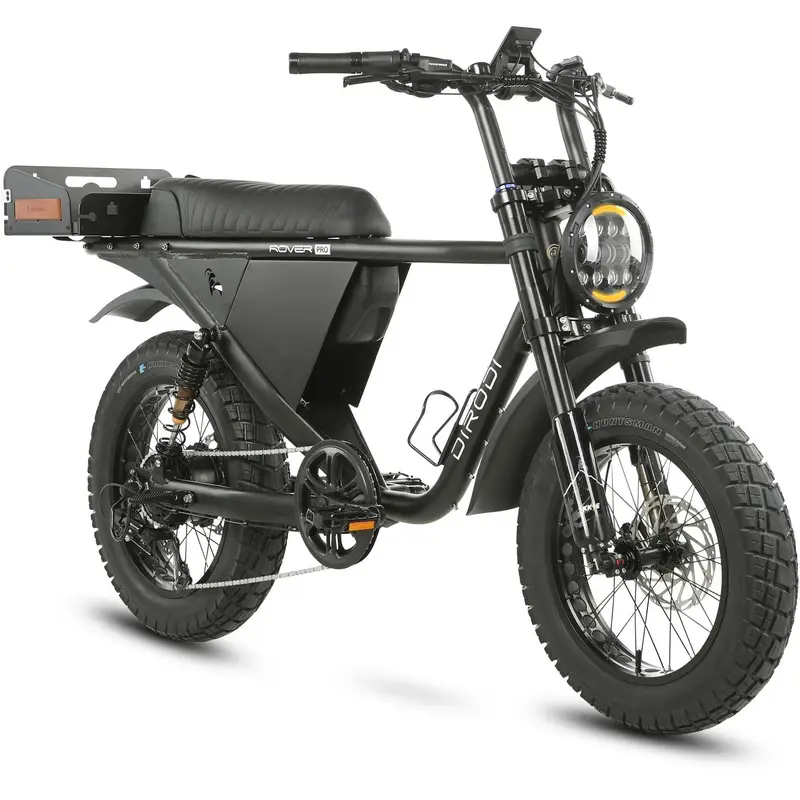
Dirodi Rover Pro 250W Electric Fat Bike
$3259 AUD • 250W EN15194 Street Legal