Battery Operated Bicycle for Adults: Range, Charging, Cost
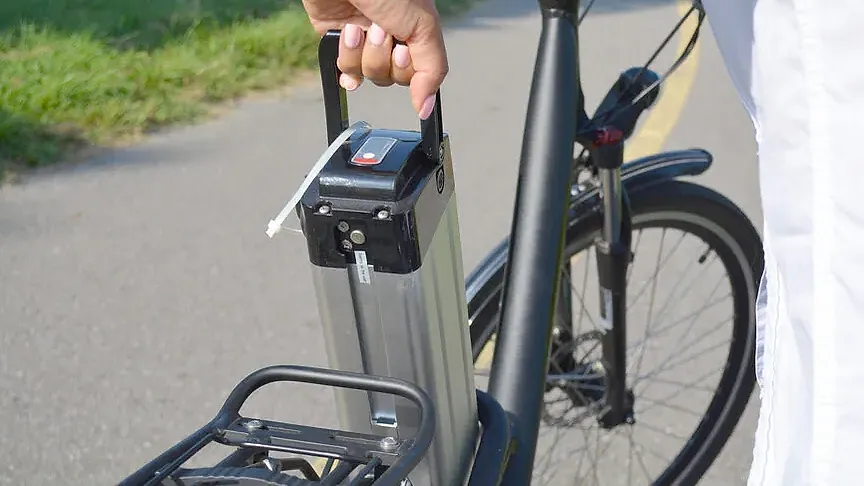
A battery operated bicycle for adults is one of the simplest ways to get further with less effort. The motor adds power when you pedal, and the battery decides how far that help lasts. The challenge is that claimed range and real range are rarely the same. This guide explains how to read a range claim, what shortens range, what a sensible battery size looks like for different riders, which habits add kilometres, how dual batteries work and what to plan for on a long trip. It finishes with a table of long-range models and current prices.
Claimed range vs real range
Range figures on a spec sheet come from test conditions: a light rider, a flat route, low assistance and mild weather. Real riding is rarely that kind. A bike quoted at 100 km may deliver 50 to 70 km in everyday use, and much less in hilly or windy conditions or with heavy loads.
The most useful figure is the watt-hour (Wh) capacity of the battery. It tells you how much energy you carry, and you can compare it across bikes. When you see an e bike long range claim, ask for the battery capacity and the assistance level used in the test, and treat the number as a best case.
A battery operated bicycle for adults is not a motorbike. The assistance cuts out at 25 km/h by design, so the way to cover more ground is a larger battery and an efficient riding style, not a faster motor.
What shortens range: hills, wind, weight and assist
Several things reduce range. Hills use the most energy, because the motor works hard against gravity. Headwinds act like a constant hill. Rider and cargo weight matter, and a heavier load needs more power to move. High assistance levels use more energy than low ones, and riding fast uses more than riding slowly.
Cold weather reduces battery output, and soft tyres or a dirty chain add drag. Together these factors can cut range by half or more compared with the best case. Plan with a margin, and aim to finish a ride with at least 20 per cent of the battery left.
Rider weight is easy to overlook. A 100 kg rider with a loaded pannier uses noticeably more energy than a 65 kg rider on the same bike, so choose a battery that suits your total weight and not only the bike's size.
Battery capacity by Wh: a simple range table
As a rough guide, many riders find 10 to 20 Wh per kilometre a useful planning number. The lower figure applies to gentle, flat riding with low assistance, and the higher figure applies to hills, headwinds and heavy riders or loads. Use it to size a battery to your riding.
| Battery size | Typical real-world range |
|---|---|
| --- | --- |
| 300 to 400 Wh | 20 to 40 km |
| 500 Wh | 30 to 60 km |
| 625 Wh | 40 to 75 km |
| 800 Wh | 50 to 90 km |
These are estimates, and your own result will depend on your route and weight.
Riding habits that add kilometres
A few habits add kilometres without much effort. Use the lowest assist level that keeps you comfortable and switch up only on climbs. Keep your tyres at the recommended pressure, because soft tyres drag. Use the gears: pedal at a steady cadence of around 60 to 80 rpm and let the motor work in its efficient range.
Smooth riding helps too. Anticipate stops, avoid hard acceleration and coast when you can. Keep the chain clean and lubed, and carry only what you need. The cumulative effect of these small changes can add 10 to 20 per cent to your range, which is the same as a larger battery.
Plan one test ride to measure your own range. Charge the battery, ride your usual route in a typical assistance level and note the distance and the remaining charge. That real-world number is more useful than any brochure.
Dual batteries and range extenders
Some bikes can take a second battery, either as a dual pack mounted on the frame or a rack-mounted extender. This doubles the energy, and it suits touring, delivery work and big days out. The trade-offs are weight, cost and compatibility, because not every bike supports it.
A second pack also helps with ageing. As your main battery loses capacity, a second one restores range. Check the bike maker's accessories list and compare the price against a bigger battery. Our e bike batteries listing shows compatible packs, and our cargo e bike range includes bikes designed for heavy use.
Long-range e-bikes compared
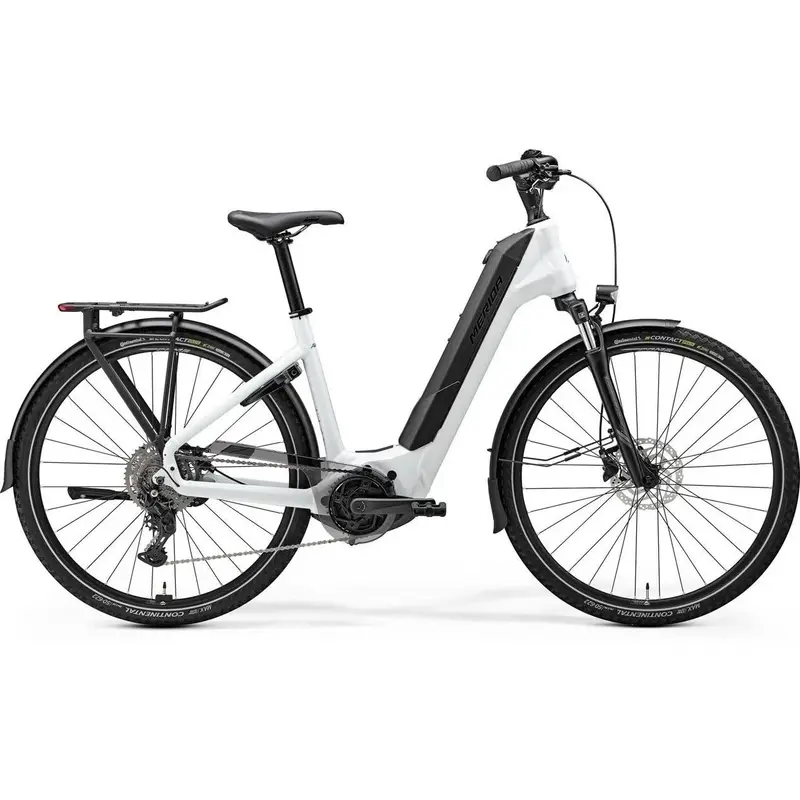
The table below lists bikes with larger batteries. Model numbers in many ranges show the battery capacity in watt-hours, so a model with an 800 in its name usually has an 800 Wh pack, but check the product page for the figure. The Merida eFloat City 400 EQ Electric Hybrid Bike Pearl White/Gunmetal Grey is a mid-priced option with a well-matched battery and motor.
If you want a more affordable battery operated bicycle, our entry-level range starts under $1,000, but the battery will be smaller. For rougher routes, consider a electric trail bicycle, and for relaxed rides with a large battery, a step-through hybrid is a comfortable choice. A foldable bicycle for adults is another option when storage matters, though range is usually shorter.
Prices are the current listed prices at the time of writing and can change. Check each product page for the latest price and stock.
Charging stops on a long trip
On a long ride, plan your charging. Public power points are rare, so ask cafes and visitor centres if you can plug in while you eat. Carry the charger and a short extension lead, and check that your battery can charge at the voltage you will find. A full charge usually takes a few hours.
Plan the route around the battery. Ride downhill and flat sections first, save the climbs for when you have more charge, and avoid leaving the battery in the sun. For a long-distance trip, consider whether an electric bike motor with a larger battery would suit better. For background on the technology, see Lithium-ion battery (Wikipedia), and for riding tips and route advice, Bicycle Network, Australia is a good place to start.
The right battery operated bicycle for adults is the one with enough range for your longest regular trip plus a margin. Use watt-hours to compare, expect real range to be lower than the claim and check that the bike has local warranty and support. If you are unsure which battery size suits you, browse the full electric bike range or tell us your route and we will help you choose.
Frequently asked questions
How far can an e-bike go on one charge?
Range depends on battery size, terrain, rider weight and assistance level. A 500 Wh battery often delivers 30 to 60 km in everyday use, and more if you ride gently on flat ground.
Does cold weather reduce range?
Hills, headwinds, heavy loads, high assistance levels and cold weather all reduce range. Soft tyres and poor chain care add drag. Plan with a margin of at least 20 per cent.
How do I estimate range from watt-hours?
Yes. Many bikes offer a second battery or a larger option. Check compatibility with your bike and compare the cost against buying a bike with a bigger battery from the start.
Is a second battery worth it?
A full charge of a 500 Wh battery costs cents at typical household rates. Charging costs are very small compared with fuel or public transport.
Does tyre pressure affect range?
A standard bike with a quality battery suits most adults. If you want to carry heavy loads or ride very long distances, choose a bike with a larger battery or a dual-battery system.
Sources and further reading
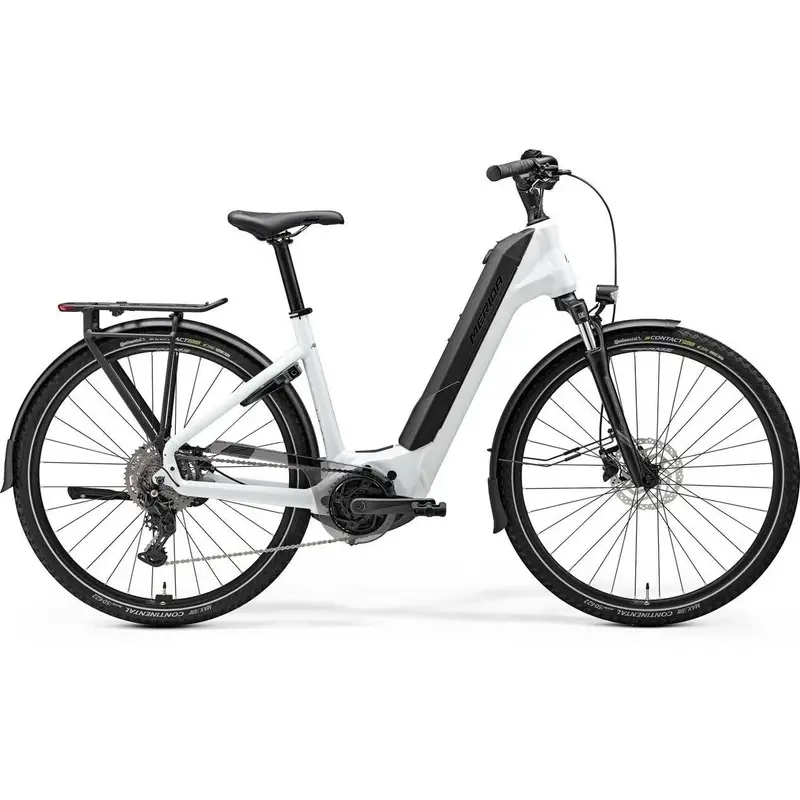
Merida eFloat City 400 EQ Electric Hybrid Bike Pearl White/Gunmetal Grey
$3199 AUD • 250W EN15194 Street Legal