E Bike Battery Guide: Capacity, Charging and Lifespan
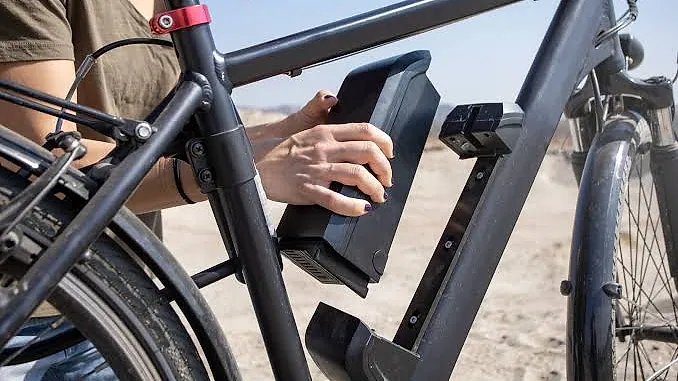
The e bike battery is the most expensive part you will replace, and the one that most affects range, weight and safety. Understanding a few numbers helps you choose the right bike, charge it properly and make it last. This guide explains volts, amp-hours and watt-hours in plain language, how many charge cycles to expect, how to charge and store a pack safely, how to spot a failing battery and what to know before you buy a replacement. It also covers safe transport and disposal, because lithium batteries need respect.
This guide uses watt-hours throughout because they allow a fair comparison between a 36 V and a 48 V pack. When a seller gives only amp-hours, multiply by the voltage to see what you are buying.
Volts, amp-hours and watt-hours explained
Three numbers describe a battery. Volts (V) describe the electrical pressure, amp-hours (Ah) describe the charge it can hold, and watt-hours (Wh) describe the energy it stores. Multiply volts by amp-hours to get watt-hours. A 36 V, 14 Ah battery stores about 504 Wh, and a 48 V, 10.4 Ah battery stores about 500 Wh.
Watt-hours are the number to compare, because they directly relate to range. A 48V battery is common on higher-powered bikes, while 36 V is common on commuter models. Both are fine if they are matched to the motor and the controller.
If you want to estimate range, divide the battery watt-hours by about 10 to 20 Wh per kilometre. The lower figure applies to flat, gentle riding, and the higher figure to hills, headwind and heavy loads.
How many charge cycles to expect
Lithium batteries age with use and time. A quality pack often lasts around 500 to 1,000 full charge cycles before it falls to roughly 70 to 80 per cent of its original capacity. For a rider who charges twice a week, that is many years. Heat, deep discharges and long storage at full charge all speed the decline.
Battery life is not a sudden end. Range simply shrinks gradually, and most riders keep using a pack well past the point where it has lost a quarter of its capacity. The electric cycle battery that holds a good charge for four or five years is a sign of a quality product and sensible care.
Partial charges are fine. Lithium batteries do not have a memory effect, so topping up after short rides does not harm the pack. In fact, keeping the charge between roughly 20 and 80 per cent is gentler than regularly running it flat.
Charging safely at home
Charge indoors, on a hard surface, away from flammable items and not near exits. Use the charger that came with the bike, and never charge a damaged or swollen battery. Do not leave a pack charging overnight if you can avoid it, and disconnect it once it is full. The ACCC publishes clear safety guidance, and you can read it in ACCC Product Safety: lithium-ion batteries guide.
An ebike charger is matched to the battery voltage and chemistry. Using the wrong charger can damage the pack or create a fire risk. If you need a replacement charger, buy one that is specified for your battery, not a universal unit of unknown origin.
Some bikes use a 48V battery, and an electric bike battery 48v pack typically delivers a little more power at the same current than a 36 V one. That does not make it better for every rider, so compare the watt-hours, the motor and the price.
Storage in summer heat and winter
Store the pack in a cool, dry place at room temperature. For long-term storage, aim for roughly 40 to 60 per cent charge and check it every couple of months. Avoid leaving it in a hot car or in direct sun, because heat is the biggest enemy of lithium cells. In winter, bring the battery inside before charging if it has been in the cold.
If you are going away for weeks, do not leave the battery on the charger and do not store it empty. A part-charged battery in a cool room will be ready when you return, and it will last longer.
Fast chargers can be convenient but may be harder on cells if used all the time. A standard charger is gentler, and most riders can charge overnight or while working without needing a fast option.
Signs a battery needs replacing
Several signs suggest a battery is tired. Range drops sharply, the bike cuts out under load, or the pack takes unusually long to charge. A swollen case, a strange smell or visible damage mean you should stop using the battery at once and have it checked.
A reputable dealer can test capacity and cell health. If the pack is under warranty, ask about replacement. If not, compare the cost of a new pack with the value of the bike, and keep in mind that a larger battery can sometimes be fitted if it is compatible. Our ebike parts range lists spare parts and compatible packs.
Cold weather reduces range temporarily, sometimes by 20 per cent or more. Keep the battery in a warm place until you ride, and expect the capacity to return once it warms up.
Replacement batteries and compatibility
Replacement batteries must match the voltage, the connector and the communication protocol of your bike. A pack that fits physically may not work with the controller. Always buy from a reputable seller and keep the receipt. Our 48v ebike battery listing shows compatible packs for popular systems, and our conversion e bike page covers packs for converted bikes.
If you are comparing the cost of a new pack against a new bike, check an electric bicycle price page to see the range of options. For dual-suspension bikes, a larger battery may be an option, and our dual suspension ebike range includes models with high-capacity packs.
Always ask for a warranty on a replacement pack and check how it will be installed. If the pack needs to be fitted by a technician, include that cost in your comparison.
Transporting and disposal
Take care when you transport a lithium battery. Most airlines do not allow e-bike batteries in checked or carry-on luggage, so plan to ship it with a licensed courier or leave it at home. In a car, keep it on the floor in a cool place and secure it so it cannot move.
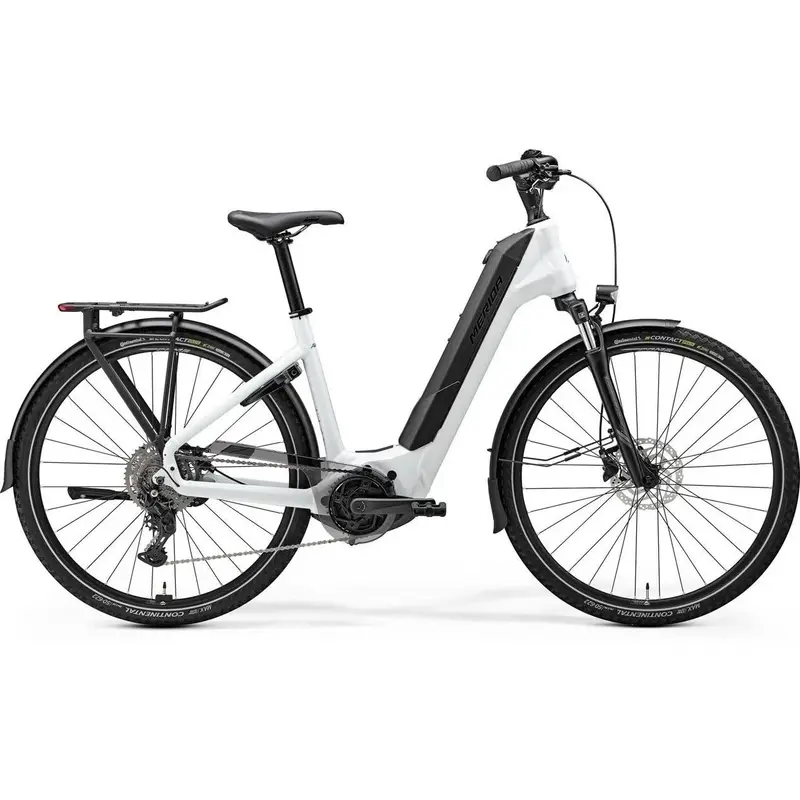
When a pack reaches the end of life, do not put it in household rubbish or recycling. Take it to a battery recycling point or a dealer that accepts used packs. For general background on the technology, see Lithium-ion battery (Wikipedia). The Merida eFloat City 400 EQ Electric Hybrid Bike Pearl White/Gunmetal Grey comes with a removable battery that is easy to charge indoors.
Keep the original box and paperwork for a replacement pack if you can, because carriers and recyclers often ask for the model details and battery type.
A little care goes a long way with an electric bicycle battery. Charge it sensibly, store it cool and use the right charger, and it will repay you with years of reliable range. If you are choosing a bike, put the e bike battery capacity, brand and warranty near the top of your list, because it is the part that decides how the bike feels in year three. The Merida eFloat City 400 EQ Electric Hybrid Bike Pearl White/Gunmetal Grey is a good example of a bike with a quality pack and local support.
Frequently asked questions
How long does an e-bike battery last?
Watt-hours are volts multiplied by amp-hours. A 36 V, 14 Ah battery is about 504 Wh. Compare watt-hours between bikes, because they relate directly to range.
Can I leave it charging overnight?
A quality pack often lasts around 500 to 1,000 full charge cycles before capacity drops to roughly 70 to 80 per cent. With normal use that is typically several years.
What is a safe way to store a lithium battery?
Charge indoors on a hard surface, away from flammable items, with the charger supplied. Do not charge a damaged battery, and disconnect once it is full.
How do I recycle an old battery?
Store it at room temperature and about 40 to 60 per cent charge for long periods. Avoid heat and direct sun, and check it every couple of months.
Can I fit a bigger battery?
Yes, but it must match the voltage, connector and communication of your bike. Buy from a reputable seller with a warranty, and ask the dealer to confirm compatibility.
Sources and further reading
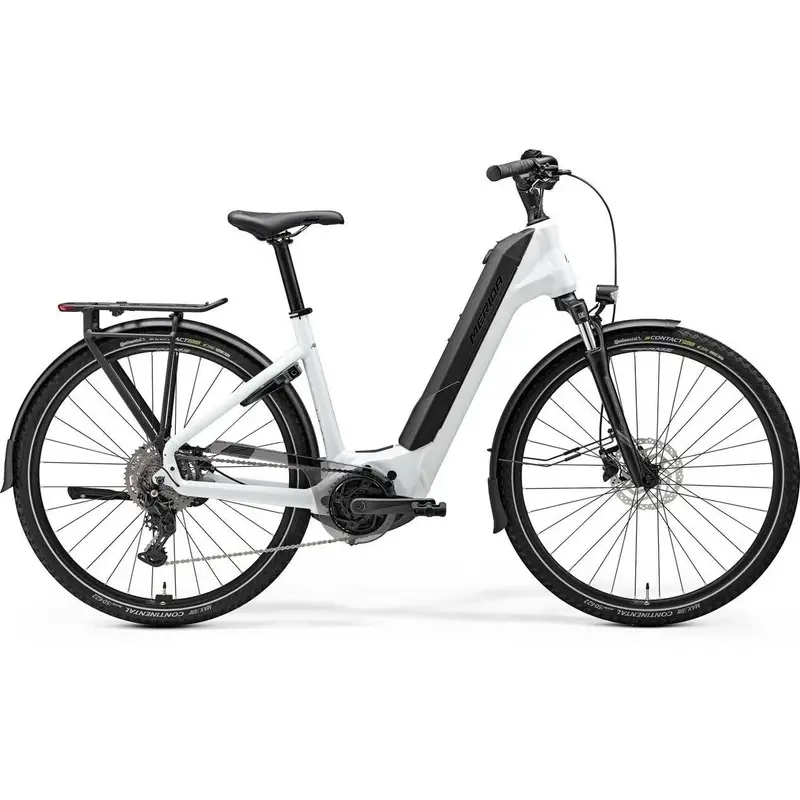
Merida eFloat City 400 EQ Electric Hybrid Bike Pearl White/Gunmetal Grey
$3199 AUD • 250W EN15194 Street Legal