Electric Dual Suspension Mountain Bike: Is Full Suspension Worth It?
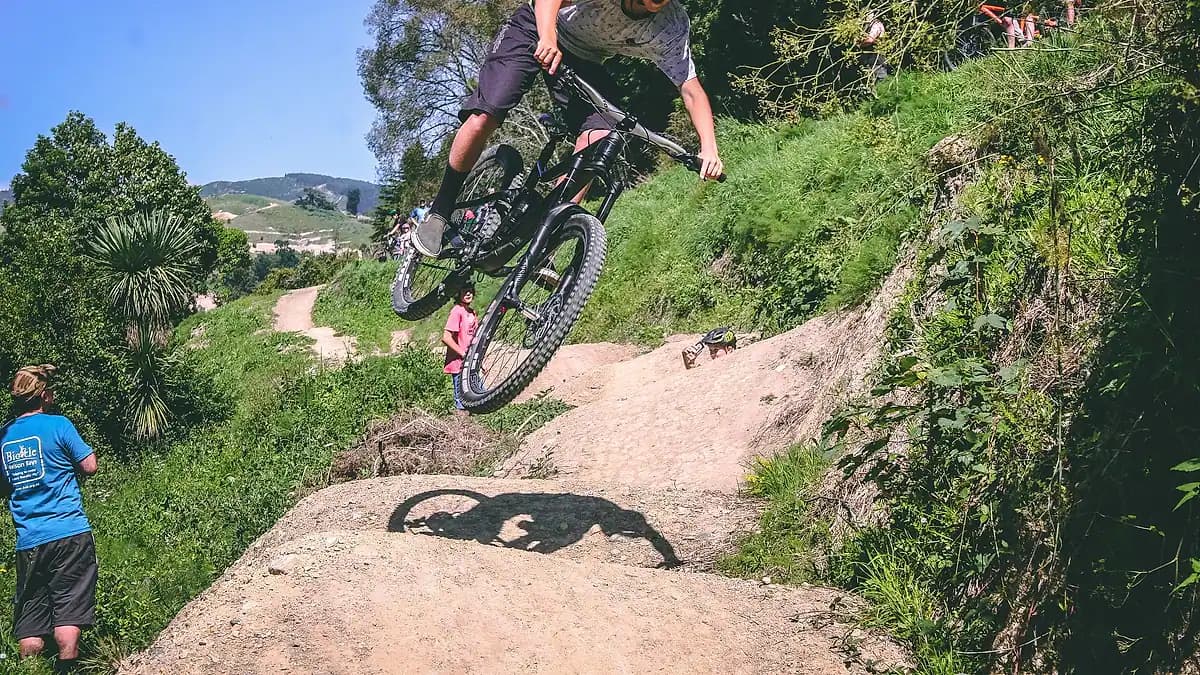
An electric dual suspension mountain bike has a shock at the front and at the rear, which keeps the tyres in contact with the ground, absorbs impacts and reduces fatigue on rough trails. It costs more than a hardtail and needs more servicing, but for steep, technical and long rides it can be worth every dollar. This guide explains what dual suspension does, how it compares with a hardtail, what travel and geometry to look for, how weight and climbing change on a full-suspension e-bike and which models in our range suit different riders and budgets.
What dual suspension does
Suspension is the part of the bike that moves to absorb bumps. The front fork absorbs impacts at the front wheel, and the rear shock does the same at the back. On a hardtail only the front moves. Full suspension keeps both tyres on the ground over roots and rocks, which improves traction, braking and comfort, especially at speed or on long descents. The Wikipedia entry on bicycle suspension explains the main designs and the trade-offs: Bicycle suspension (Wikipedia).
Many riders also ask whether the extra moving parts make a bike less reliable. Modern full-suspension frames are strong, but they have more bearings and bolts to keep an eye on, so a simple routine of cleaning and checking after each ride pays off.
Hardtail or full suspension
A hardtail is lighter, simpler and cheaper, with fewer parts to service. It suits smoother trails, fire roads and riders who like a direct feel. A dual suspension e bike is heavier and more expensive, but it handles rough ground far better and is less tiring over a long ride. If your trails are rocky or steep, full suspension is the better tool, and our dual suspension ebike page lists the range. If you ride gentler terrain on a budget, a hardtail from the hardtail mountain bikes range is the smarter choice.
Search results for an e bike dual suspension model often mix long-travel enduro bikes with light trail bikes, so check the travel figure and the weight before you compare prices. A bike with 170 mm of travel and a bigger battery is a different tool from one with 130 mm and a smaller battery, even if both are called dual suspension.
Travel, geometry and rider weight
Travel is the distance the suspension can move, measured in millimetres. Trail bikes typically have 130 to 160 mm, while enduro and downhill bikes have more. More travel absorbs bigger hits, but makes the bike heavier and less efficient to pedal. Geometry matters too: a longer, slacker bike is more stable at speed, and a shorter, steeper one climbs and turns more easily. Ask for the travel figure and match it to your trails, and see our electric trail bicycle page for trail-oriented models.
Rear suspension designs differ too. Some use a single pivot, others a multi-link system that keeps the pedalling platform firm and the ride supple. You do not need to learn the engineering, but a test ride on a hill will show whether a bike bobs under power or stays calm. Ask for a ride on a climb, not just a flat car park.
Climbing with a heavy full-suspension e-bike
Weight is the main downside, because a full-suspension frame, a larger battery and a longer-travel fork all add kilograms. A mid-drive motor helps, because it sits low and centred and the bike gears multiply its effort on climbs. Even so, an electric mountain bike dual suspension model can weigh well over 25 kg, so practise lifting it and check that your car rack can carry it. For steep descents and park riding, look at our downhill mountain bike range, which has longer travel and stronger parts.
A tip on climbing: a good full-suspension bike has a lockout or a firm pedalling platform that stops the rear shock bobbing under power. Learn how to use it, because it makes climbs more efficient and saves battery.
Maintenance and servicing costs
Servicing costs more on a full-suspension bike. The fork and shock need regular servicing, the pivots need checking and the bearings wear. Budget for a yearly service, and keep the bike clean after muddy rides. Pivot bolts and linkages should be checked and tightened as the maker advises. Riders who service their own bikes can save money, but suspension work needs the right tools and knowledge, so a trusted workshop is often the better choice.
Setup also matters. A fork and shock need the right air pressure for your weight and your riding style, and the wrong setting can make a good bike feel poor. Ask the seller or a workshop for help with sag, the amount the suspension compresses when you sit on the bike, and write the numbers down.
Dual-suspension e-MTBs compared
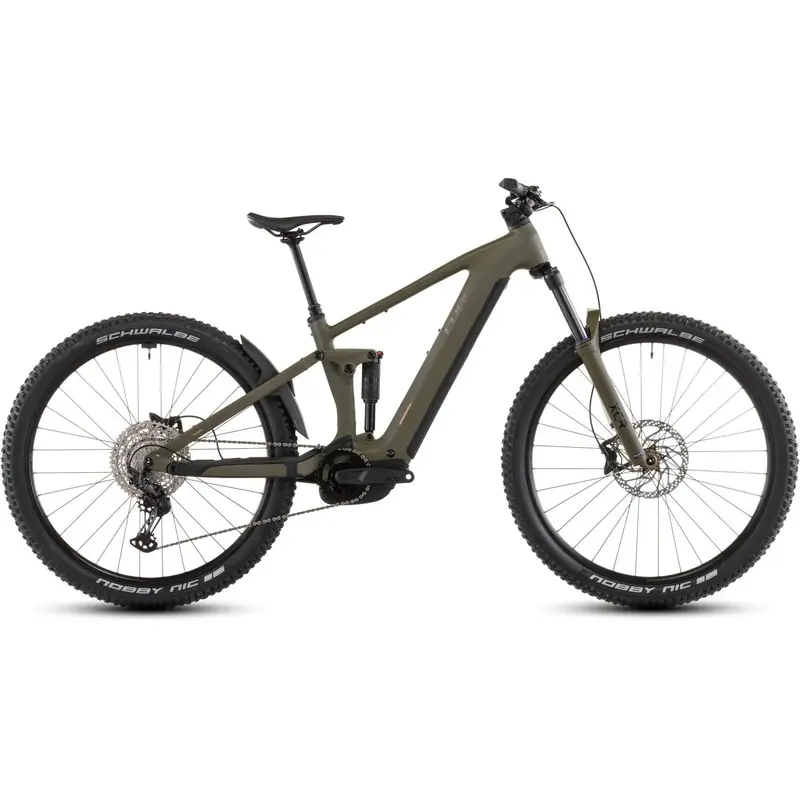
The table lists dual-suspension e-MTBs in our range, from a mid-priced trail bike to a premium enduro bike, with their current prices. The embedded pick, the Cube Stereo Hybrid ONE44 Pro 800 Electric Trail Bike Dustyolive'n'Gold, has a Bosch motor and an 800 Wh battery. Our range includes bikes from Cube and Merida, with Bosch and Shimano motors. You may also see a suspension ebike listed with only a front fork, which is a hardtail, so check the description. Prices change, so check each product page before you order.
The embedded model is not the cheapest full-suspension bike, but the price includes a Bosch system and an 800 Wh battery, which is hard to beat for long days. If you want to spend less, the Cube Stereo One22 Pro and the Merida eOne-Forty give you full suspension at a lower price.
Prices are the current listed prices at the time of writing and can change. Check each product page for the latest price and stock.
Choosing for your trails
To choose, think about your trails first. If you ride fire roads and light trails, an electric bike with suspension on the front only is enough. If you ride rocky, steep or long trails, full suspension is worth the extra. Fit also matters, so check the size chart. Pedals, grips and a dropper post can transform the feel of a bike, and our e bike pedals page lists pedals that suit trail riding. And always wear a helmet, gloves and eye protection. For trail access and etiquette, see Bicycle Network, Australia.
If you are not sure, hire or test ride both types on a trail you know. The difference between a hardtail and a dual suspension e bike is easy to feel in ten minutes, and it is the best way to decide.
An electric dual suspension mountain bike is the right tool for rough, steep and long trails, and a poor fit for smooth paths and tight budgets. Think about your trails, your budget and your service habits, compare the models in the table and book a test ride if you can.
Frequently asked questions
Is dual suspension worth it on an e-MTB?
It is worth it on rocky, steep and long trails, where it adds grip, comfort and control. On smooth trails and fire roads, a hardtail is lighter, cheaper and simpler, and usually the better value.
How much travel do I need?
Trail riding usually suits 130 to 160 mm of travel. More travel suits steeper, rougher terrain but adds weight and makes the bike less efficient to pedal on long climbs, so match it to your trails.
Do full-suspension e-bikes need more servicing?
Yes, usually. The fork, shock, pivots and bearings need regular servicing. Plan on a yearly service and clean the bike after muddy rides to extend the life of the parts and keep it quiet.
Can I use one for commuting?
You can, but a full-suspension e-bike is heavier and less efficient on the road than a hybrid or hardtail. For mixed use, a hardtail with a front fork is often the better compromise on price and weight.
What is the cheapest full-suspension e-MTB?
Prices for full-suspension e-MTBs in our range start around $4,000 and rise above $10,000 for premium models. Check the table and the product pages for the current prices, which can change at any time.
Sources and further reading
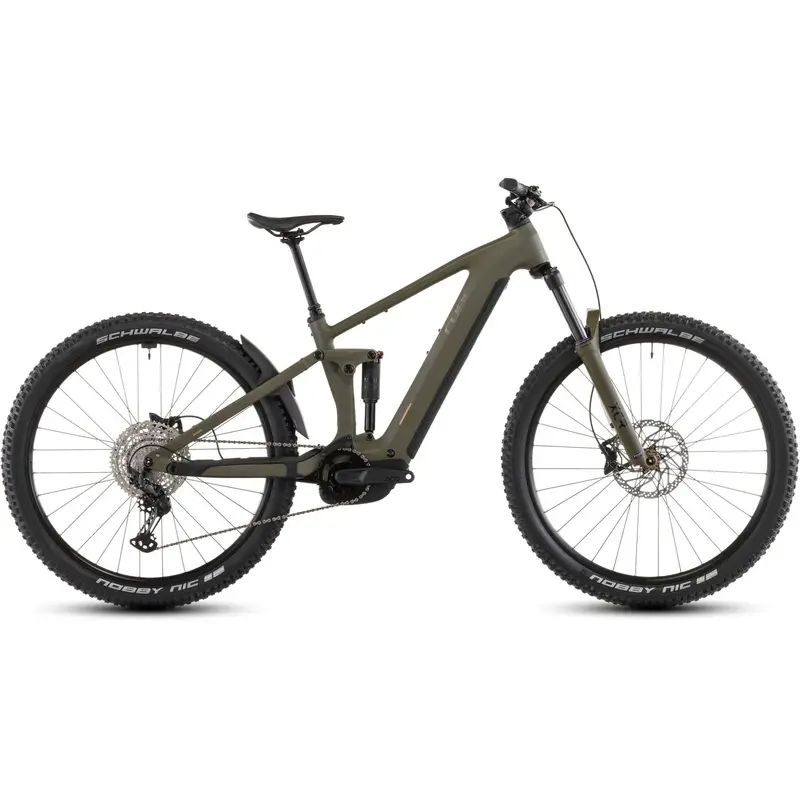
Cube Stereo Hybrid ONE44 Pro 800 Electric Trail Bike Dustyolive'n'Gold
$4499 AUD • 250W EN15194 Street Legal